
 | |  | |  | |  | |  | |  |
 |
| |
 |
| |
 |
| |
 |
| |
 |
| |
 |
| |
 |
| |
 |
| |
 |

| Why are we interested in Rural Lands Preservation? |
canal bank 40 years ago -- now it's a 6-lane racetrack.
canal bank 40 years ago -- now it's a 6-lane racetrack.
Remember that this is the outcome of the same exact land use plans that we have in the Treasure Coast, with a 20-year head
start.
The one saving grace is that everybody has made a lot of money. Growth is a powerful economic engine while it's happening.
However, when land reaches the level of settlement of Davie, the fun ends, and what remains are a pile of costs to taxpayers
and residents that will continue forever.
On that day, I decided to do something to change things, and have devoted a fair amount of time over the last 15 years trying
to make a difference. Fortunately, I've been able to share the experience with a diverse group of very wonderful people, and it
has been an absolutely fascinating journey.
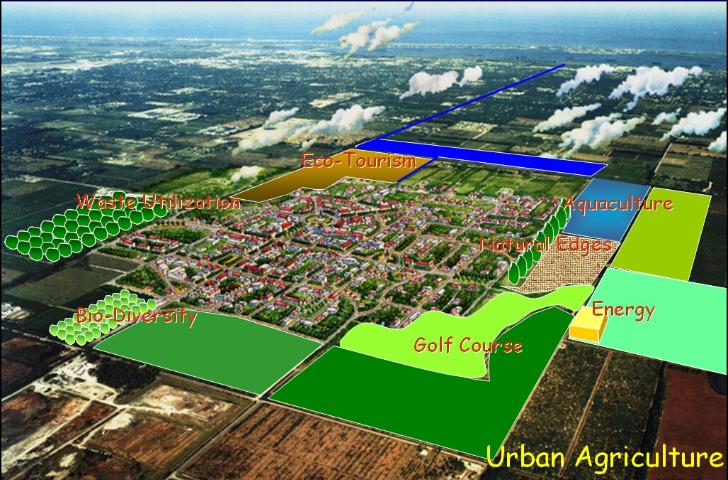
Here's a look at an alternative scenario to Davie:
canal bank 40 years ago -- now it's a 6-lane racetrack.
Remember that this is the outcome of the same exact land use plans that we have in the Treasure Coast, with a 20-year head
start.
The one saving grace is that everybody has made a lot of money. Growth is a powerful economic engine while it's happening.
However, when land reaches the level of settlement of Davie, the fun ends, and what remains are a pile of costs to taxpayers
and residents that will continue forever.
On that day, I decided to do something to change things, and have devoted a fair amount of time over the last 15 years trying
to make a difference. Fortunately, I've been able to share the experience with a diverse group of very wonderful people, and it
has been an absolutely fascinating journey.
Here's a look at an alternative scenario to Davie:
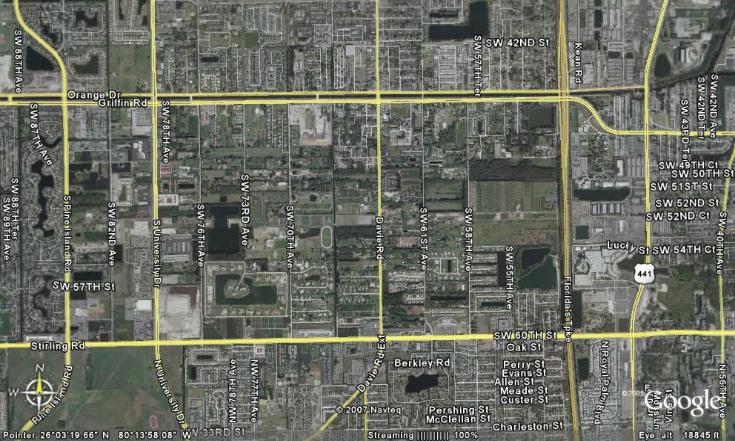
| May, 2007. One day about 15 years ago, I was driving up to Ft. Pierce, where I live now, from Davie, the town where I grew up down in South Florida. The development was rampant, gobbling up large tracts of land that used to be Everglades, farms, and pastures. For the umpteenth time, I thought how sad it was that those special places of my youth were gone forever, and that future generations would never have the opportunity to share those experiences. developer follows the rules. developer follows the rules. When I was a kid, I could saddle my horse and ride in any direction through the countryside around Davie. The landscape was primarily citrus groves, sod fields, vegetable farms, cattle ranches or just open wetlands that were the eastern edge of the Everglades. There were only a few homes, usually located on the farms. Here's an aerial photo of what the area looks like today: |
Epilogue
This journey will never end. Things will never be "fixed" -- us humans are going to continue to have an escalating impact on
the natural world. We must build skills and knowledge that allow us to manage our impacts in a way that the planet
remains a pleasant, fulfilling place to inhabit.
spending time doing work that doesn't pay bills.
spending time doing work that doesn't pay bills.
are fortunate that they have chosen to live and work in our communities. Many thanks to both of them.
are fortunate that they have chosen to live and work in our communities. Many thanks to both of them.
And, finally, I have to pay my compliments to the people of the Treasure Coast. They collectively realize that we live in a
special place, and that it's worth the trouble required to keep it that way.
Pete Spyke
This journey will never end. Things will never be "fixed" -- us humans are going to continue to have an escalating impact on
the natural world. We must build skills and knowledge that allow us to manage our impacts in a way that the planet
remains a pleasant, fulfilling place to inhabit.
spending time doing work that doesn't pay bills.
spending time doing work that doesn't pay bills.
are fortunate that they have chosen to live and work in our communities. Many thanks to both of them.
are fortunate that they have chosen to live and work in our communities. Many thanks to both of them.
And, finally, I have to pay my compliments to the people of the Treasure Coast. They collectively realize that we live in a
special place, and that it's worth the trouble required to keep it that way.
Pete Spyke
Everyone we talk to think it's a great idea. The problems are entirely related to changing the behavior of the development
else should be doing it, not themselves.
It's possible to achieve these outcomes, however. There are successful examples, and if done right, the economic engine of
Growth does not have to be compromised. It just takes a bit of courage, a great deal of creativity, and a lot of
communication.