
 | |  | |  | |  | |  | |  |
 |
| |
 |
| |
 |
| |
 |
| |
 |
| |
 |
| |
 |
| |
 |
| |
 |


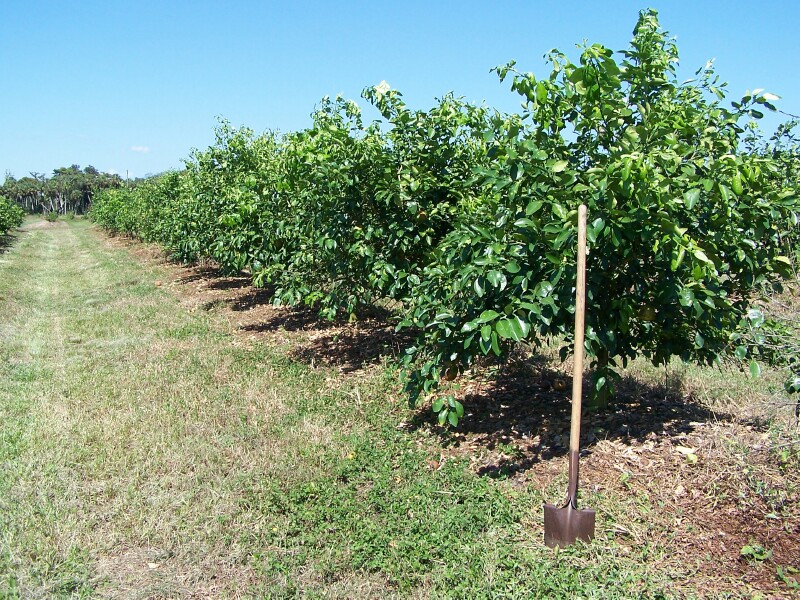

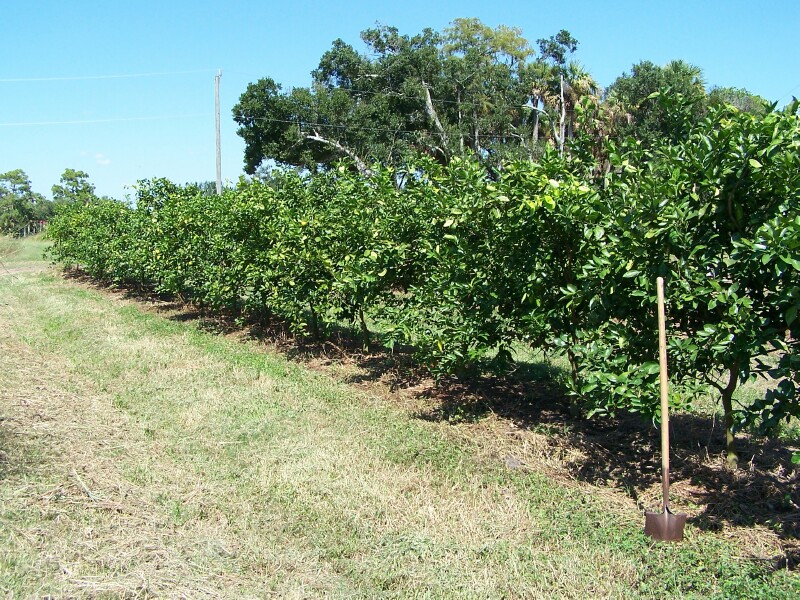
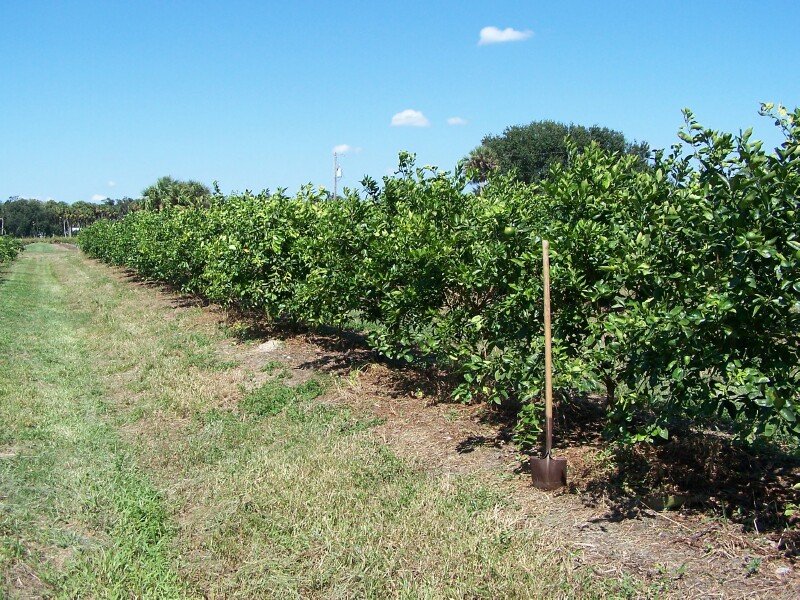


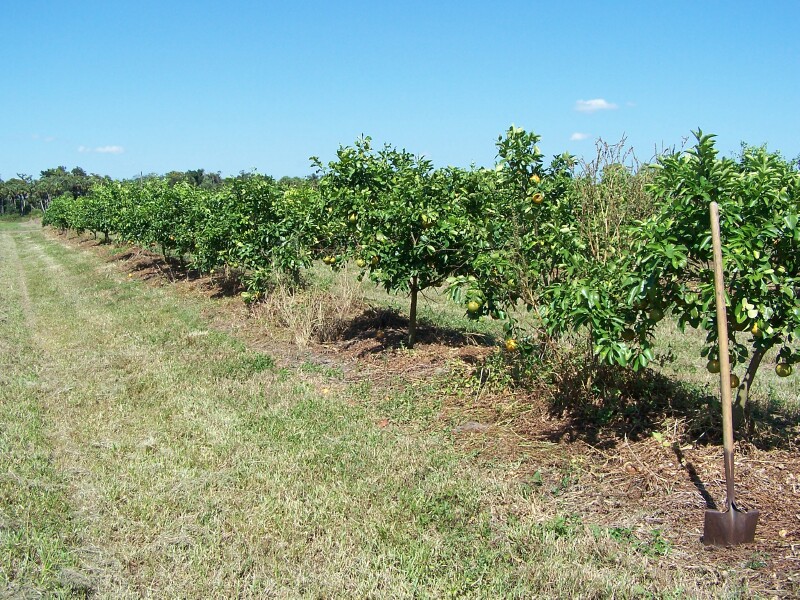


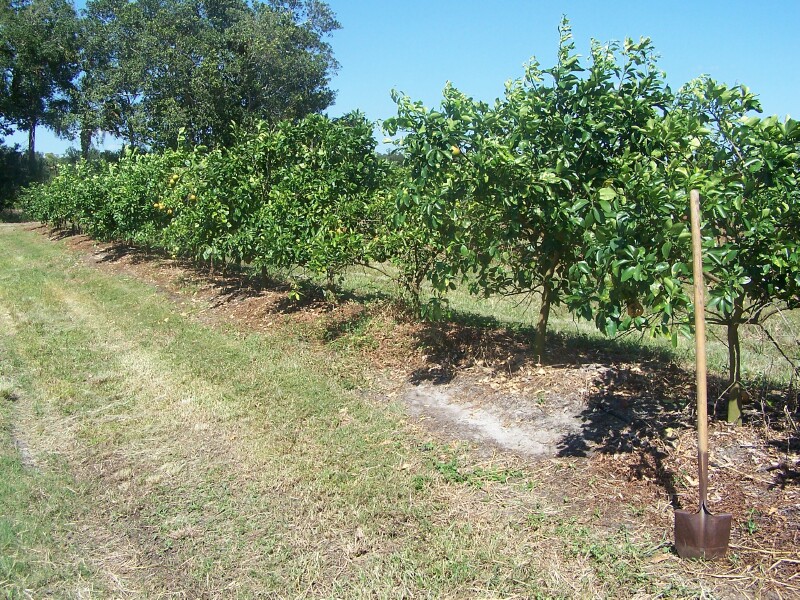
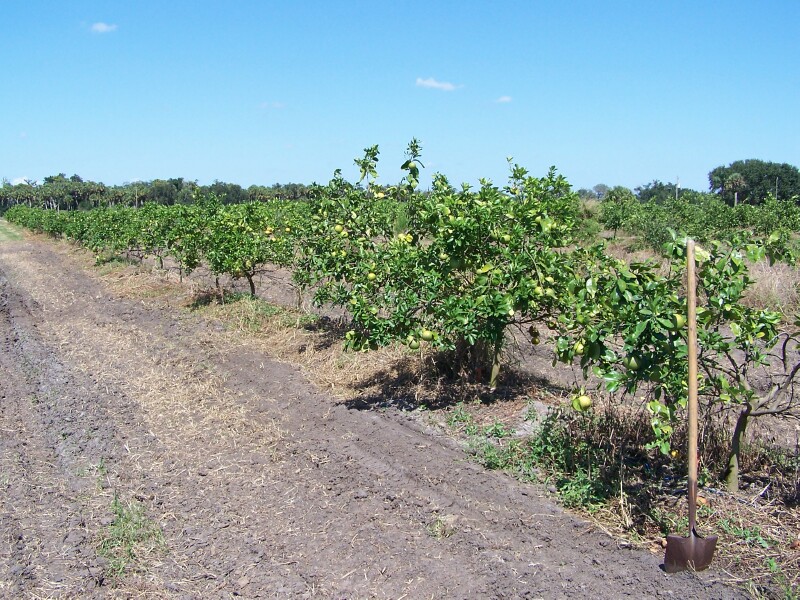
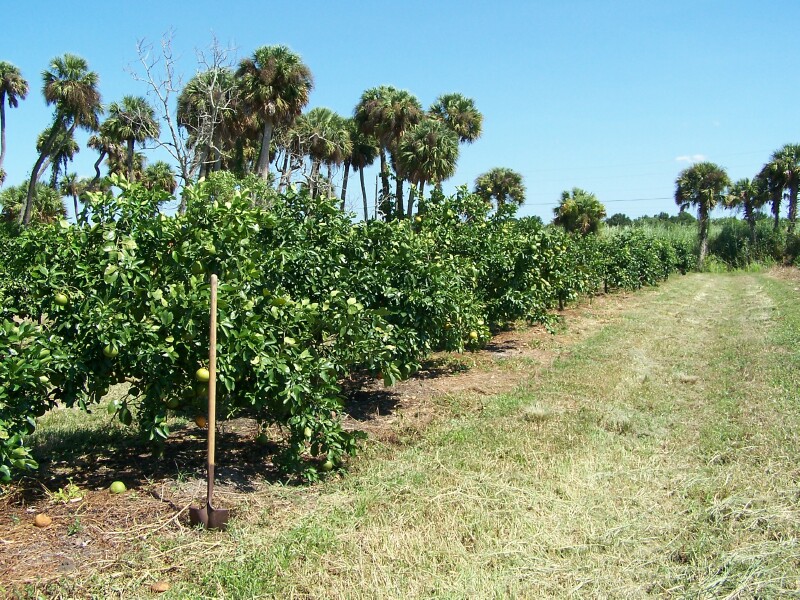


Ray Ruby/Smooth Flat Seville - Winder soil
Ray Ruby/Smooth Flat Seville - Microjet on
Chobee soil
Chobee soil
Minneola/Swingle Microjet on Winder soil
Ray Ruby/Flying Dragon - Microjet on
Chobee soil - September 29, 2009
Chobee soil - September 29, 2009
Ray Ruby/Flying Dragon - Chobee soil
Ray Ruby/Smooth Flat Seville - Chobee soil
Ray Ruby/Flying Dragon - Winder soil
Minneola/Sun Chu Sha - Winder soil
Flame/Smooth Flat Seville - Winder soil
Flame/Cleo - Winder soil
Flame/X639 - Winder soil
Rio/US897 - Winder soil
Minneola/Swingle - Winder soil
The root density under the emitters is excellent. There was doubt voiced that this would not occur in Florida's high-rainfall environment.
The root density immediately under the emitters is as great as in South Africa. Only 1 foot away from the emitters, root density is normal
for the rootstock. There are so many roots under the emitters, a shovel cannot penetrate more than a couple of inches. The OHS
condition has been established in Rock Bottom in the drip zones.
The grapefruit are fruiting well, but the Minneolas have not set a good crop through this year. Most of the trunks on the Minneolas are not
large enough in diameter to allow girdling, but some of the larger trees will be girdled this fall to evaluate the effectiveness. Fruit quality
much of the fruit -- see below.
Severe flooding from Tropical Storm Fay in August of 2008 caused root damage in all the trees. Most have recovered, although trees on
Chobee soil -- also the lowest part of damage, and there was more late bloom fruit this year as well.
Diaprepes are present, at very high levels in the past. Chobee soil tends to have more of a problem from Phytopthora in
Diaprepes-damaged roots, and trees are not as healthy on this soil. Trees on Winder soil are performing better. Microjet on Chobee
shows greater stunting and root damage. Microjet scheduling was adjusted to try and reduce problems with minor success. Drip trees
on Chobee are performing better than Microjet. Nematodes have been applied for the last two years through the system, and Diaprepes
populations have been dramatically reduced.
Many of the Microjet trees are as big as the drip trees, but they receive 4-6 X more water and fertilizer. Minneola with microjet on
Winder soil are growing very well, but show more minor element deficiencies than drip trees. All minors are applied only through the
irrigation system. During 2009 we will apply about 60 lbs of N per acre to the drip zones, with up to 360 trees per acre -- a much lower
rate than with conventional systems.
Salinity continues to be a problem in the winter. The canal water runs about 1,000 ppm TDS in the winter months, which is the upper
limit for quality. Trees on X639 and US 897 show the least effect, followed closely by trees on Cleo and Gou Tou. Swingle, Flying
Dragon, and Sun Chu Sha are intermediate, and Smooth Flat Seville is the most affected, showing leaf yellowing and margin burn,
followed by defoliation. Fertilizer applications were suspended last winter, and periodic flushing was performed, but the symptoms were
still pronounced.
Tree height ranges from 3-4 feet to 8-9 feet, depending on rootstock, soil, and irrigation type. Trees on X639 and Gou Tou are the
largest, and those on Flying Dragon are the smallest. Trees on US897 are intermediate, fairly tolerant to salt, and are very precocious
compared to other varieties. Trees on Flying Dragon fruit heavily as well -- perhaps too much for the size of the tree in early years, which
may require early harvest of fruit to reduce tree stunting.
Imidacloprid have been applied 3x/year with a basal trunk drench at the maximum per-acre rates. The longevity of control is becoming
obviously different depending on tree size, with control failing before 90 days in the largest trees. Foliar sprays for psyllid have been
limited to a late dormant Danitol. Next year we plan on using foliar control through late June, then apply imidacloprid at the annual rate
through the drip system in the early summer, followed by Platinum in the early fall at the full annual rate, also through the system. This
may also help with citrus canker control.
Canopy coverage ranges from 40% for Flame on X639 and Minneola on Gou Tou to less than 10% for Flying Dragon trees (100% canopy
coverage is the size the trees will be maintained through pruning, not the ground). 25% canopy coverage would be a good average for
scheduling this year. Larger trees at 6' in-row have grown together and will form a hedgerow by the end of next year. Smaller trees at 8'
in-row will not touch each other even after next year, so spacing is very much dependent on tree vigor. 6 and 8 feet in-row remain the
choices until longer-term experience is gained - the primary consideration is how far apart the trees will be if one is removed for Greening
control.
Citrus Canker is severe in the grapefruit. Most of the trees are affected. Ficus benjamina were planted for internal windbreaks, but were
all killed by a freeze in January of 2009. A more cold hardy windbreak will be replanted. Foliar sprays have been ineffective for canker
control. A modified imidacloprid application schedule may help reduce damage in the summer. The Minneolas have not been affected
by canker.
