
 | |  | |  | |  | |  | |  |
 |
| |
 |
| |
 |
| |
 |
| |
 |
| |
 |
| |
 |
| |
 |
| |
 |
Design and Components of an OHS/APS System |
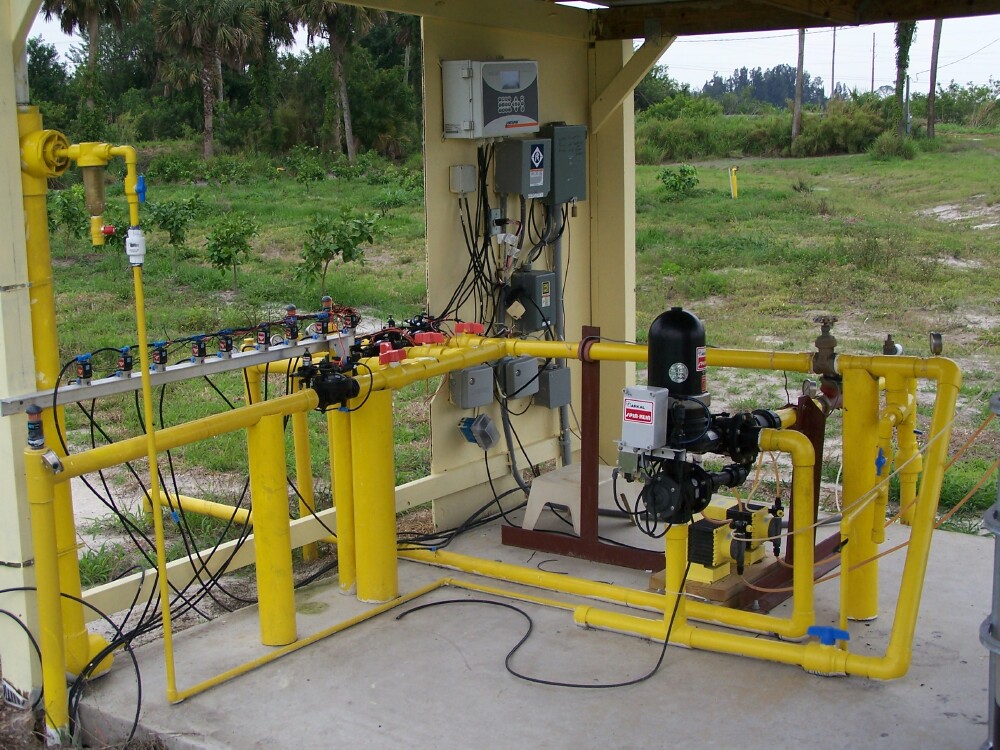
Proper design of an Open Field Hydroponics (OHS) system is critical. The basic components of an OHS system are as follows:
Drip OHS can be used with any grove configuration, including classical grove designs. However, Arapaho recommends adoption of a Advanced Production Systems (APS) approach layered over the OHS core technology. The Advanced Production Systems approach includes the following:
OHS/APS Costs: The systems cost about 20% more per acre than microjets, and of course there is a higher tree cost per acre due to the number of trees. However, the cost per tree is much less than conventional planting systems. This is the driving factor behind the economic performance. The establishment and operating cost is much less per tree, and therefore per box, until the trees form a solid hedgerow. Since this occurs earlier in the life of the grove, operating profits are much higher over a 10-year period. We have developed a cost-comparison model for you to use when evaluating different planting schemes. We are finding that production costs in the first few years are only about half the per-tree cost of conventional microjet blocks. In later years, production costs may be higher due to the requirement of hand labor for pruning if that option is chosen. The pruning is a combination of hand and machine as opposed to all mechanical as we now use in Florida. Other operations, such as girdling, may require more hand labor as well. On the other hand, savings will be achieved due to elimination of broadcast fertilizer applications, reduced herbicide costs since water and fertilizer are applied only to small surface areas and the trees will begin shading in the row sooner, and irrigation operation as result of hands-off automation and less maintenance of emitters and lines. See for yourself -- Download Arapaho's Cost Comparison Model Here |


Click on pictures to enlarge
